
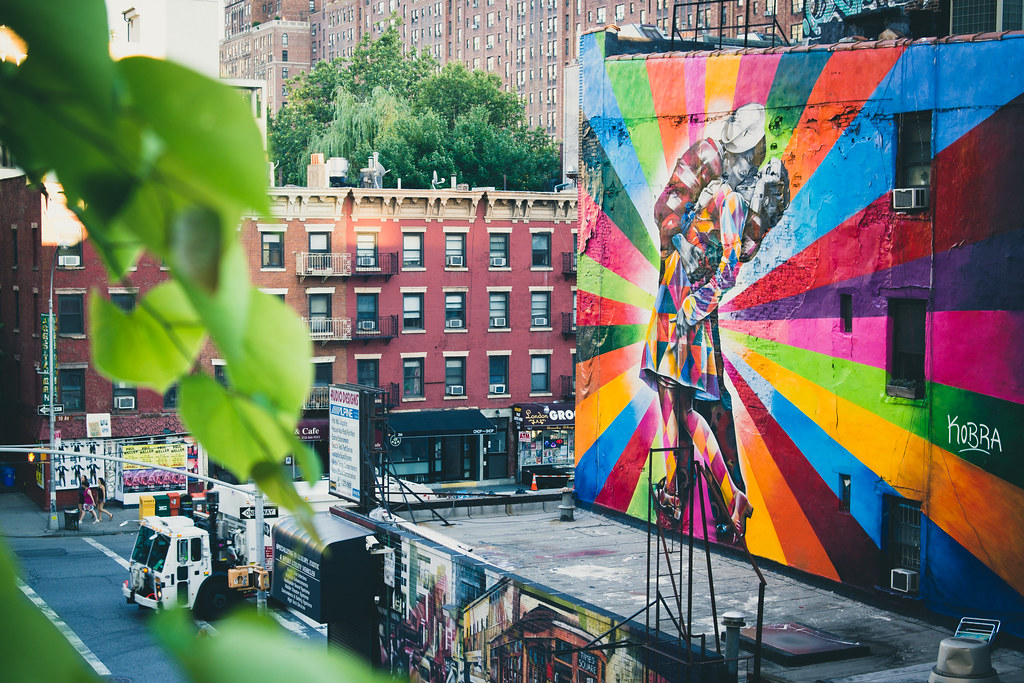
Introduction: Art Without Walls
New York City has always been a canvas. From subway graffiti in the 1970s to today’s massive wall pieces stretching across entire buildings, the city’s art history is as layered as its skyline. In 2025, that tradition is thriving in the form of street murals. These works transform neighborhoods into open air galleries, mixing political messages, cultural celebrations, and sheer visual beauty. Unlike paintings behind museum glass, murals belong to everyone. They cannot be ticketed or gated. They are art for the city, by the city.
The rise of street murals is not just about aesthetics. It is about community, identity, and reclaiming space. In neighborhoods across the five boroughs, murals tell stories of resilience, honor local heroes, and create destinations where people gather. New York’s streets have always had a pulse. Murals are the heartbeat.
A Brief History of Murals in NYC
Murals in New York are not new. In the early 20th century, Works Progress Administration artists painted public pieces to inspire communities during the Depression. The 1970s brought graffiti culture, when tags and colorful lettering transformed subway cars and brick walls. What was once dismissed as vandalism is now recognized as a movement that gave rise to legends like Jean-Michel Basquiat and Keith Haring.
Today, murals are more institutionalized but no less powerful. City programs, nonprofits, and local businesses commission artists to transform walls into landmarks. Festivals celebrate mural-making, turning it into performance as much as product. The art form has shifted from rebellion to recognition, but it remains deeply tied to New York’s identity.
Murals as Community Storytelling
The most compelling murals are not just decorative. They tell stories. In the Bronx, murals celebrate hip hop’s 50-year history, featuring portraits of pioneers who shaped global music. In Queens, walls highlight immigrant communities, painting the flags, foods, and faces that define neighborhoods. Brooklyn murals often mix social commentary with abstract beauty, reflecting the borough’s reputation as both activist and artistic hub.
Murals are also memorials. After tragedies, artists take to the streets to honor lives lost. These murals become sacred spaces where people gather, grieve, and remember. Unlike statues that often feel distant, murals feel alive. They change as the city changes, layered with meaning and memory.
The Instagram Effect
Part of the surge in murals comes from social media. Murals are inherently shareable. A bright wall in Bushwick or a photorealistic portrait in Harlem becomes a backdrop for thousands of Instagram posts. Influencers seek out murals for photoshoots. Tourists build entire itineraries around mural-hunting.
Artists are aware of this dynamic. Many design pieces with photo opportunities in mind, balancing artistry with accessibility. This is not to say murals are only for pictures. They carry weight and purpose. But the Instagram effect has undeniably amplified their reach, making them part of the city’s visual brand.
The Bronx: Hip Hop and Heritage
The Bronx has always been central to mural culture. In recent years, it has leaned into celebrating its role as the birthplace of hip hop. Massive murals of artists like Big Pun, KRS-One, and Grandmaster Flash dominate walls. These are not just tributes to music. They are affirmations of identity for a borough often misrepresented in mainstream narratives.
Beyond hip hop, Bronx murals celebrate heritage. Puerto Rican, Dominican, and African communities use murals to showcase pride and resilience. They are statements of presence, saying we are here and we belong. For Bronx residents, murals are not just art. They are mirrors of culture.
Brooklyn: Activism and Abstraction
Brooklyn’s murals often lean political. From climate change warnings in Greenpoint to racial justice tributes in Bed Stuy, walls speak truth to power. Street art here remains a form of activism, reclaiming space from corporate ads and reminding passersby of issues that matter.
At the same time, Brooklyn’s art scene brings abstract murals that play with color and form. Williamsburg and Bushwick feature walls where geometry and surrealism collide. These works often have no explicit message but transform industrial blocks into creative wonderlands.
The diversity of Brooklyn’s murals mirrors the borough itself. They are eclectic, bold, and unapologetic.
Queens: Diversity on Display
Queens is the most diverse borough in New York, and its murals reflect that. Streets in Jackson Heights, Flushing, and Elmhurst are lined with pieces that celebrate immigrant communities. Murals feature Tibetan prayer flags, Colombian coffee motifs, and South Asian festival scenes.
Queens murals often emphasize unity. They bring together cultures in shared compositions, showing how different heritages create a collective story. For residents, these murals are affirmations of pride. For visitors, they are lessons in diversity.
Manhattan: From Downtown Grit to Uptown Grandeur
Manhattan’s murals vary dramatically depending on neighborhood. Downtown, murals lean gritty and experimental, reflecting SoHo’s art history and the Lower East Side’s punk legacy. Uptown, murals lean celebratory and monumental. Harlem in particular is filled with murals honoring jazz musicians, civil rights leaders, and community elders.
In Midtown, murals often intersect with commerce. Corporate sponsorships bring large-scale installations, sometimes criticized as branding disguised as art. Still, even commercial murals add vibrancy to streets dominated by glass and steel.
Staten Island: The Quiet Contributor
Often overlooked, Staten Island has developed its own mural scene. Murals here often highlight natural landscapes, local history, and nautical themes. They may not be as photographed as those in Brooklyn or Manhattan, but they are deeply tied to community pride.
Staten Island’s murals remind us that art is not just about global recognition. It is about local love.
Festivals and Collective Creation
Mural festivals have become staples in New York. Events like the Bushwick Collective draw artists from around the world to transform blocks into living galleries. These festivals turn painting into performance, with crowds watching as walls evolve over days.
They also foster community. Locals contribute ideas, provide food, and celebrate the finished work. Festivals prove that murals are not solitary acts but collaborative endeavors between artists and neighborhoods.
Murals and Gentrification
Murals exist in complex relationship with gentrification. On one hand, they beautify neighborhoods and attract visitors. On the other, they can be co-opted as tools of development, raising property values and pushing out the very communities they represent.
Artists are aware of this tension. Many work with local residents to ensure murals reflect authentic voices rather than outside narratives. Still, the debate continues. Murals are powerful, but power can cut both ways.
The Future of Murals in NYC
Looking ahead, murals will only grow in prominence. Advances in technology will bring interactive walls where projections change with movement. Augmented reality apps will let viewers scan murals for hidden layers of animation and sound. Murals will not just be seen. They will be experienced.
At the same time, traditional mural-making will endure. Paint on brick, brush on concrete—these will remain the foundation. Technology may add layers, but the essence of murals is permanence in impermanent spaces.
Conclusion: A City That Breathes Art
Murals remind us that New York itself is alive. Walls breathe stories, colors, and dreams. They are not confined to museums or galleries. They belong to streets, to people, to neighborhoods.
In 2025, the boom in street murals proves that art is not a luxury. It is a necessity. It gives voice to the voiceless, pride to the overlooked, and beauty to the ordinary. New York is not just a city of buildings. It is a city of murals, an open air gallery where every block tells a story.